
Platform
 Overview
 Integrations
Use Cases
Many Possibilities. One Platform.
 Marketing Changes
 Cross - Platform
 Everything
 Budget Allocation
AI and Automation
The Always-on Incrementality Platform
 Explorer
 Analyst
 Geolift
 Actionable Insights
 Media Mix Modeling
Solutions
Teams
Built for your whole team.
 Growth Marketers
 Marketing Analysts
 Data Analysts
Industries
Trusted by all verticals.
 Gaming & Entertainment
 Fintech
 Travel & mobility
 Lifestyle
 eCommerce & Retail
 Healthcare & Clinical Services
 Agencies
Mediums
Measure any type of ad spend
What are the differences between INCRMNTAL and Fospha? Both platforms promise better marketing measurement. The real difference is philosophical. Fospha asks, “Who touched the user?” INCRMNTAL asks, “Did this campaign actually yield incremental results?”
INCRMNTAL is not a multi-touch attribution platform, and that is by design. It was built in response to the structural weaknesses of user-level tracking, the foundation on which platforms like Fospha operate. For years, marketers believed stitching every touchpoint together would unlock clarity.
But stitching journeys is not the same as proving impact. Even before privacy changes, path-based attribution relied on correlation, not causation. Now, with cookie deprecation, limited mobile identifiers, and an increasing number of brands operating campaigns in an omni-channel world, that correlation has weakened further.
The issue is not that measurement suddenly broke.
The issue is that assigning credit was never the same as measuring incremental impact.
Fospha’s model depends on reconstructing user journeys across devices and channels. That assumption is becoming fragile across mediums – influencers, CTV, linear TV, OOH, Mobile Apps, Web. When identity resolution becomes partial or probabilistic, the output inherits those weaknesses. The result may look precise, but that does not equal accuracy.
Key limitations include:
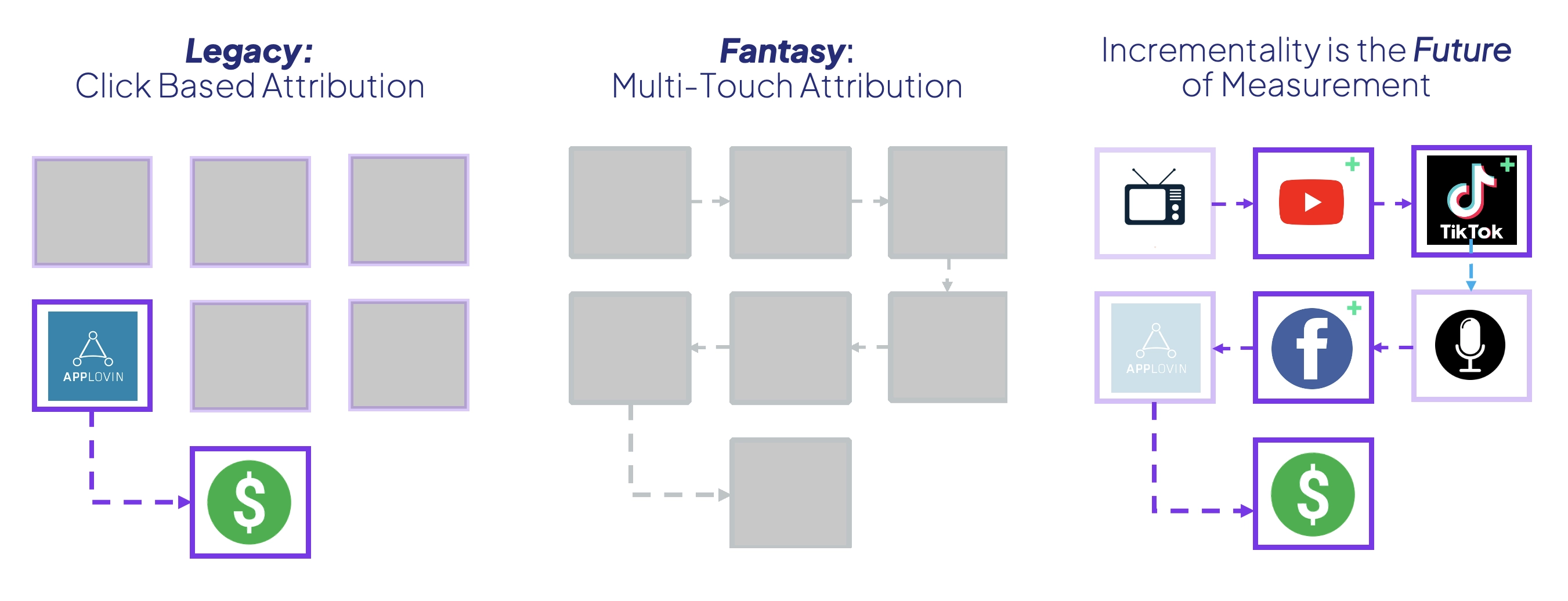
This creates a core problem. If a customer would have converted anyway, attribution models still distribute credit across observed touchpoints. They cannot distinguish between influence and inevitability.
Would this conversion have happened without paid search?
Is retargeting generating new demand or capturing existing intent?
Are upper-funnel campaigns driving lift or just appearing early in journeys that were already in motion?
Attribution answers who was present. It does not answer what changed.
INCRMNTAL starts from a very different premise. Instead of reconstructing user paths, it measures incremental impact against a modeled counterfactual baseline, while banning PII data all-together. The question is not who touched the user. The question is what would have happened if this change had not occurred.
Using always-on causal AI, INCRMNTAL continuously measures the incremental contribution of each and every change, starting with ad groups, campaigns, channels, and mediums, across every country, and OS. It was designed for a privacy-first ecosystem where user-level data is limited and often misleading. INCMRNTAL never required PII or any other user data from customers. Rather than fighting signal loss, it operates at the aggregate level where statistical validity is stronger.
This enables practical, budget-driving answers:
This is not about creating a narrative of participation. It is about measuring contribution. Cross platform advertisers do not care about fractional credit across a journey. They care about incremental impact on revenue.
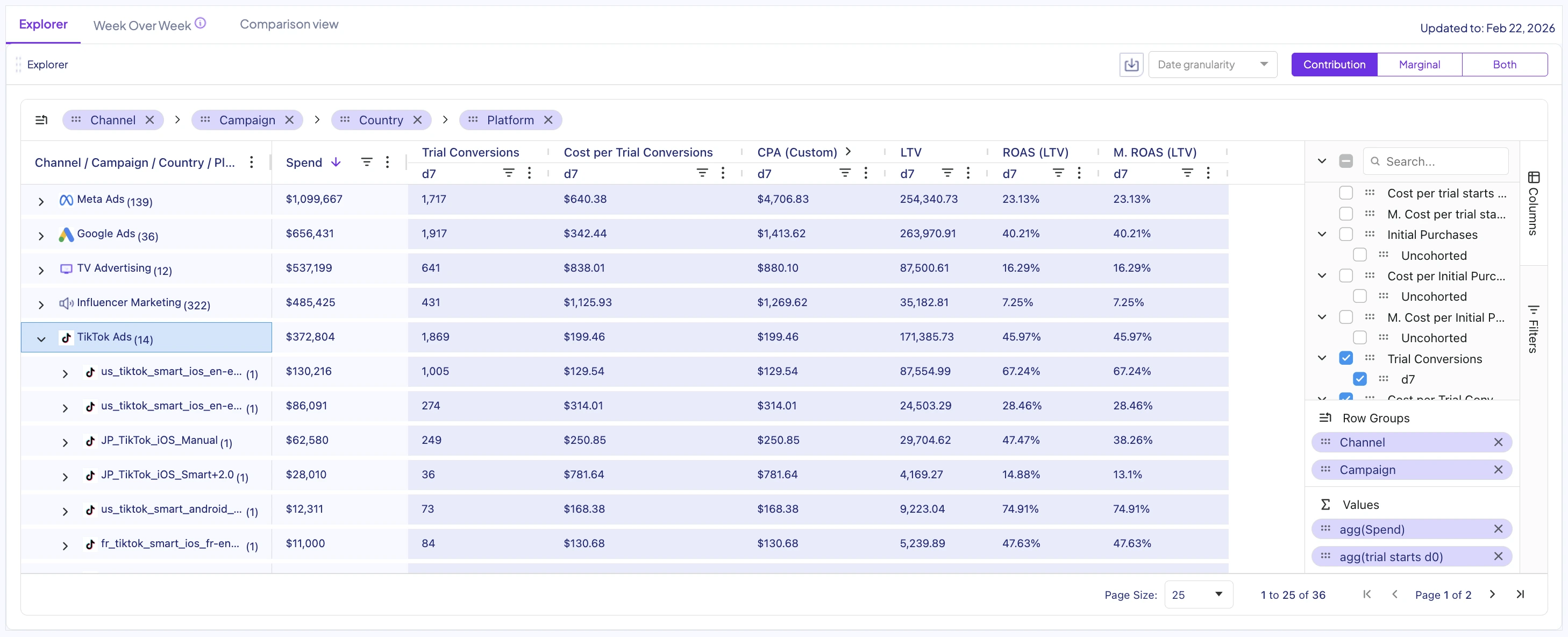
The difference between Fospha and INCRMNTAL is structural. Fospha refines multi-touch attribution to map journeys and distribute credit, an approach that depends on identity resolution and path reconstruction.
INCRMNTAL measures causality. It focuses on what actually moved the needle.
In a world defined by privacy constraints and fragmented signals, the question is no longer who gets the credit. It is what truly drove growth. If the goal is to optimize media based on incremental business outcomes rather than modeled paths, the shift is clear: from attribution to incrementality.
 iOS
iOS Android
 Web
Web TV
TV Influencer Marketing
 Out of Home
 In game
 Podcast
 About Us
 Contact