
Platform
 Overview
 Integrations
Use Cases
Many Possibilities. One Platform.
 Marketing Changes
 Cross - Platform
 Everything
 Budget Allocation
AI and Automation
The Always-on Incrementality Platform
 Explorer
 Analyst
 Geolift
 Actionable Insights
 Media Mix Modeling
Solutions
Teams
Built for your whole team.
 Growth Marketers
 Marketing Analysts
 Data Analysts
Industries
Trusted by all verticals.
 Gaming & Entertainment
 Fintech
 Travel & mobility
 Lifestyle
 eCommerce & Retail
 Healthcare & Clinical Services
 Agencies
Mediums
Measure any type of ad spend
Political ads can change what a campaign actually delivers. For advertisers, that makes it useful to look beyond the media plan when reviewing results.
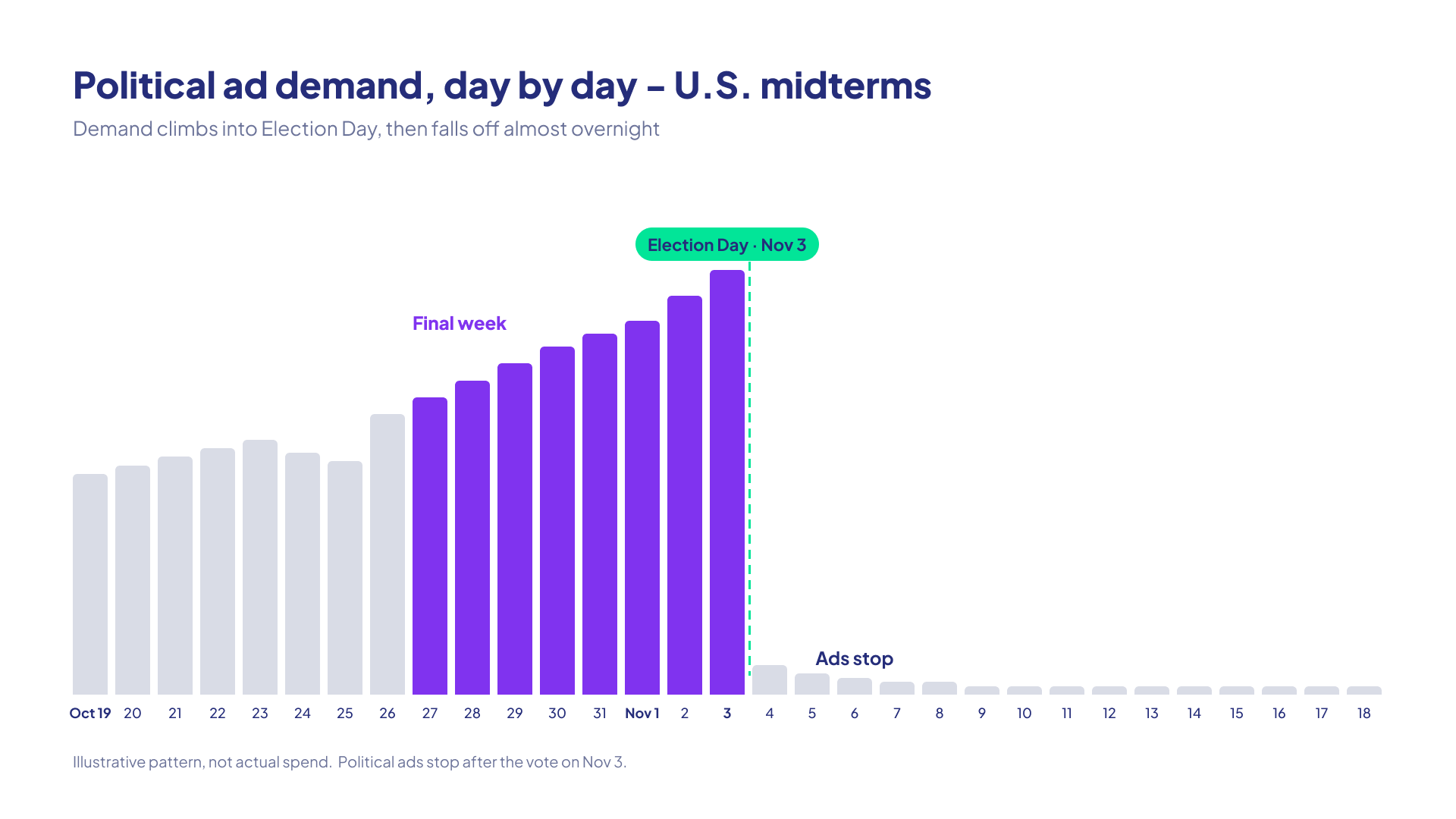
Political advertising doesn’t run year-round. In the U.S., federal elections happen every two years, and political ads come in a burst: they ramp up in the months before an election, hit their peak in the final weeks, and then drop off. For brands, that means a few weeks where TV, streaming and other channels stop working like “business as usual.” Prices can rise, placements can move, and plans built on normal conditions may not run as expected.
That competition peaks around Election Day, Tuesday, November 3, 2026. In some U.S. markets, media buyers and agencies have reported higher TV and CTV prices, as well as commercial placements being taken over by political ads. These reports reflect conditions in particular markets, not a measurement of the entire U.S. market.
For example, consider a brand with a holiday campaign booked in one of these markets. Some placements may air as planned. Others may be moved or replaced, while the cost of reaching viewers changes. The campaign’s original plan and the media the audience actually saw may no longer match.
That creates two separate questions: What happened to the media plan? And what was the marketing’s incrementality, meaning what did it add to business results?
Media delivery records can help answer the first question. Compare planned placements with what aired, check whether ads were moved or replaced, and review spend and CPM by market and channel.
During the election period, that check matters more. As Digiday reported, local TV stations can bump a brand’s spot when a political buyer pays more. The replacement spot they offer can push the ad into less effective inventory. Brands are also moving budget to streaming services that don’t accept political ads, such as Netflix, Amazon Prime Video and Disney+, which is pushing prices up on those platforms too.
This information gives marketers context for interpreting campaign performance. If exposure or cost changed, that matters when reviewing the results. But delivery data alone does not establish how much the campaign added to sales or another KPI.
A sales increase during a campaign does not show by itself how many sales the campaign caused. Some may have come from other marketing activity, seasonal demand, or other factors. Attribution is one way to connect ad interactions to conversions, while incrementality asks how much additional outcome marketing generated.
INCRMNTAL measures incrementality continuously, using marketing activity, spend, and KPI data to estimate the impact of marketing changes over time, without relying on user-level tracking. This causal approach helps separate a real change in what marketing contributed from normal ups and downs in campaign performance. The aim is to help marketers understand what their activity added as campaigns and conditions evolve.
The election will pass, but the media conditions around a campaign may take time to settle. Political spending has already disrupted regional advertisers’ holiday plans, and those holiday campaigns keep running after the votes are counted. Marketers can return to their delivery and performance data after Election Day, check what changed, and continue measuring the incremental contribution of their marketing.
The key is to keep the two questions connected but distinct: understand what the audience actually saw, then measure what marketing added.
But before you open another campaign report, take a few minutes for what really matters. Go vote.
 iOS
 Android
 Web
 TV
 Influencer Marketing
 Out of Home
 In game
 Podcast
 About Us
 Contact