
Platform
 Overview
 Integrations
Use Cases
Many Possibilities. One Platform.
 Marketing Changes
 Cross - Platform
 Everything
 Budget Allocation
AI and Automation
The Always-on Incrementality Platform
 Explorer
 Analyst
 Geolift
 Actionable Insights
 Media Mix Modeling
Solutions
Teams
Built for your whole team.
 Growth Marketers
 Marketing Analysts
 Data Analysts
Industries
Trusted by all verticals.
 Gaming & Entertainment
 Fintech
 Travel & mobility
 Lifestyle
 eCommerce & Retail
 Healthcare & Clinical Services
 Agencies
Mediums
Measure any type of ad spend
(This article is a deep dive of one of our 2026 predictions)
Out-of-Home (OOH) advertising is on the verge of a revolution. In 2026, those old and stale billboards are being replaced with flashy digital billboards and screens in public spaces. Historically, out-of-home (OOH) campaigns were mainly about branding and broad awareness. You’d put up a static billboard and hope the right people saw it.
Hope is not a strategy.
But now the game is changing. Thanks to tech breakthroughs and AI-driven measurement tools (including platforms like INCRMNTAL), Digital Billboard Ads (or “DOOH”) will finally be able to prove it can drive real value – not just serve as redundant background posters…and with this proof, and the digitization of the medium will open up global demand, turning DOOH into one of the fastest new mediums.
Major locations like Times Square have had Digital Billboards for years. What changed ?
Prime location had digital billboards for years. Tokyo Shibuya station diagonal crosswalk, London piccadilly circus, the Las Vegas stripe, are known for their flashy billboards and major brand takeover. But those billboards came at extreme costs. Panels would be regularly break and be replaced due to sun/rain wear-and-tear. Advertising across such digital billboards was priced accordingly, which is why they exclusively attracted the Brand campaigns.
Your average neighborhood billboard is not Times Square (apologies to our New Yorker readership!). As long as high maintenance was needed for digital large screens, DOOH was almost exclusively reserved for premium brands, but that would change with innovation in LED technology.
One catalyst for the DOOH’s evolution is the advancement of display technology for digital billboards. The screens themselves have gotten a major upgrade. New large-format displays - whether LED, OLED or the latest microLED - are brighter, crisper, and more energy-efficient than ever. For instance, modern microLED panels deliver vivid colors and deep blacks even under direct sunlight, all while consuming less power. Less power means less costs, and less costs drives OOH companies to upgrade their network and digitalize it.
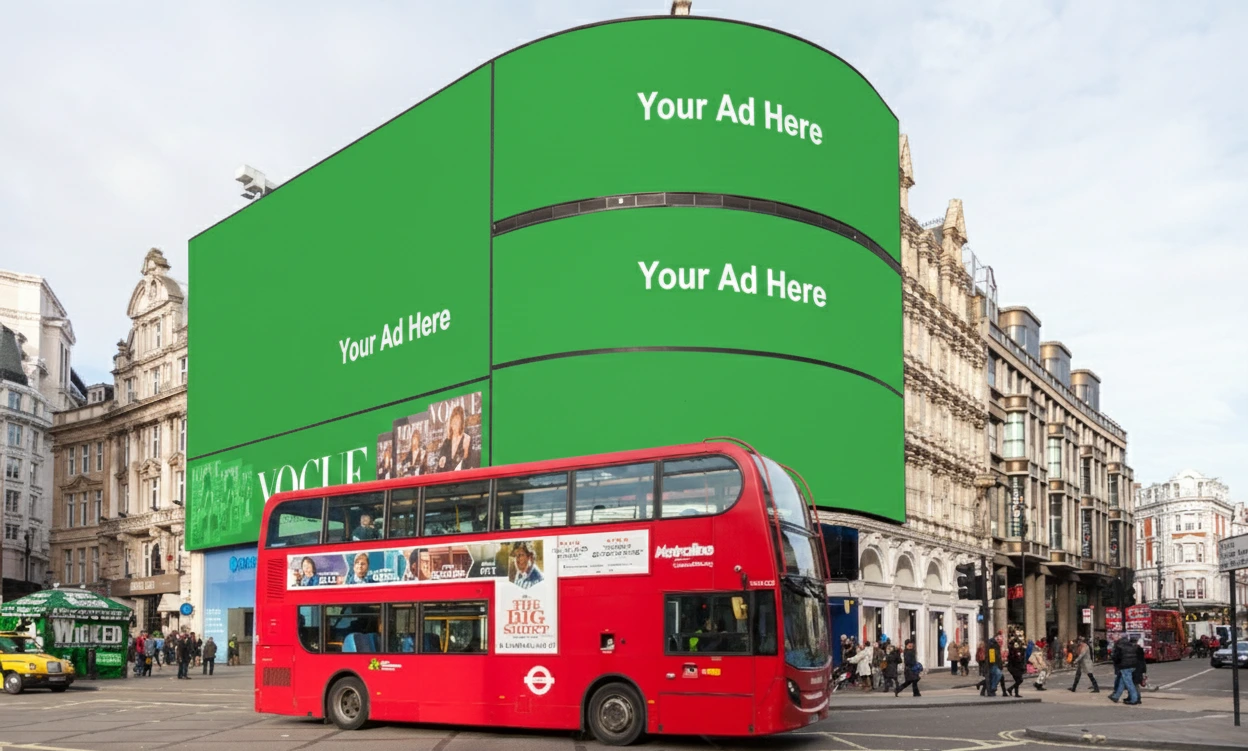
Another key difference between classic OOH and modern DOOH is the ability to rotate multiple ads in a single location. A static billboard could only feature one advertiser for weeks or months, but a digital billboard can cycle through a carousel of ads in the same timespan, which actually attracts users attention, thus improving awareness and results. This greatly increases the available ad inventory (and revenue potential) without any new construction or added real estate.
Rotation goes hand-in-hand with programmatic scheduling and dynamic creative. Ads on DOOH screens aren’t stuck in one place or one message for long periods. Campaigns can be programmed to update content in real time or trigger different creatives based on context. Instead of a static ad for weeks or months, DOOH Ads can change by time of day, temperature, audience demographics, or other factors to maximize relevance.
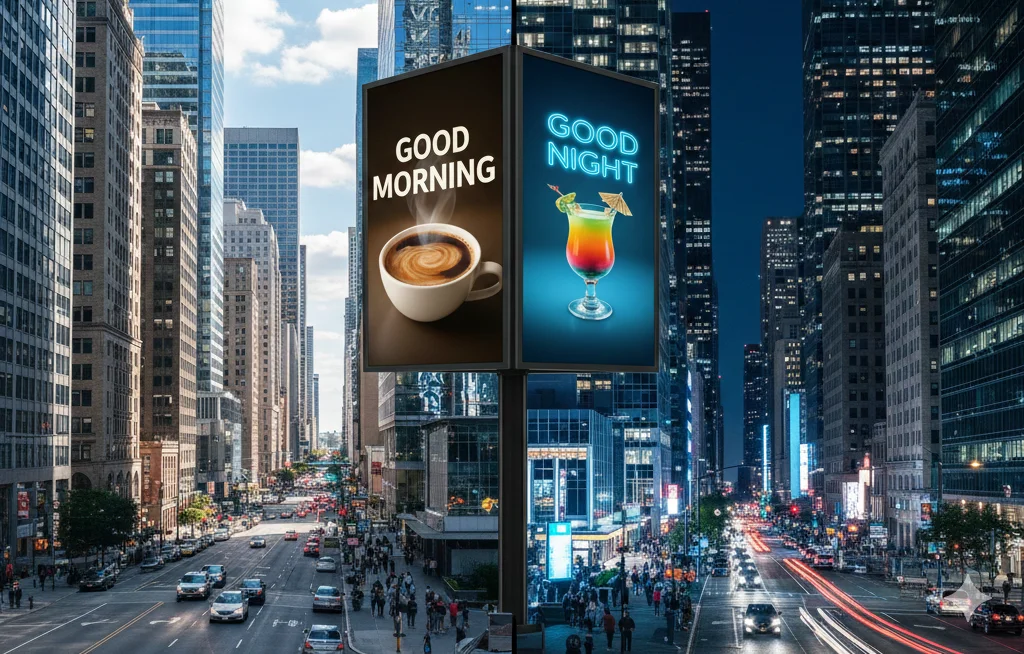
For the first time in forever, Advertisers like could even A/B test their billboard creative, showing one ad for a few days, and another for the next. This kind of optimization was unthinkable in the static OOH era when changing a billboard meant printing and manual labor. In short, DOOH screens give brands unprecedented flexibility to serve the right message at the right time in the right place - just like online ads, but in the physical world.
The odds of a Korean mobile gaming company buying a static bus stop billboard in Cleveland, Ohio is…pretty low. Perhaps THE MOST transformative change is why DOOH is growing is that DOOH “opened the door” to global advertisers through programmatic buying. In the past, buying a billboard was often a manual, local affair – you’d negotiate with a media company for a fixed location and time, which favored big advertisers and agencies. Now, programmatic DOOH (DOOH) platforms and exchanges allow any advertiser anywhere to bid on digital billboard impressions in real time, similar to online and mobile advertising.
This means a gaming company based in Finland could run a targeted campaign on digital screens in, say, Spokane International Airport, or a niche e-commerce retailer could buy a few slots on the 405 – all through a few clicks on a demand-side platform. Marquee inventory that used to be locked up by the biggest spenders is increasingly accessible. In fact, virtually any kind of DOOH inventory is now available programmatically, including Times Square.
The global connectivity of DOOH marketplaces massively expands who can participate. Small and mid-size brands, even startups, can now compete for outdoor impressions that were completely out of reach. Digital platforms going into the self-service model lowered the barriers by offering control and almost no minimums, instead of requiring month-long, high-cost commitments.
Instead of buying “4 weeks of this location”, Advertisers can bid on impressions, and learn the value of an OOH impression – something they were almost never able to do without complex market research and/or user-surveys.
In 2026, expect this democratization of DOOH to accelerate, with digital screens becoming a truly global marketplace rather than a local silo.
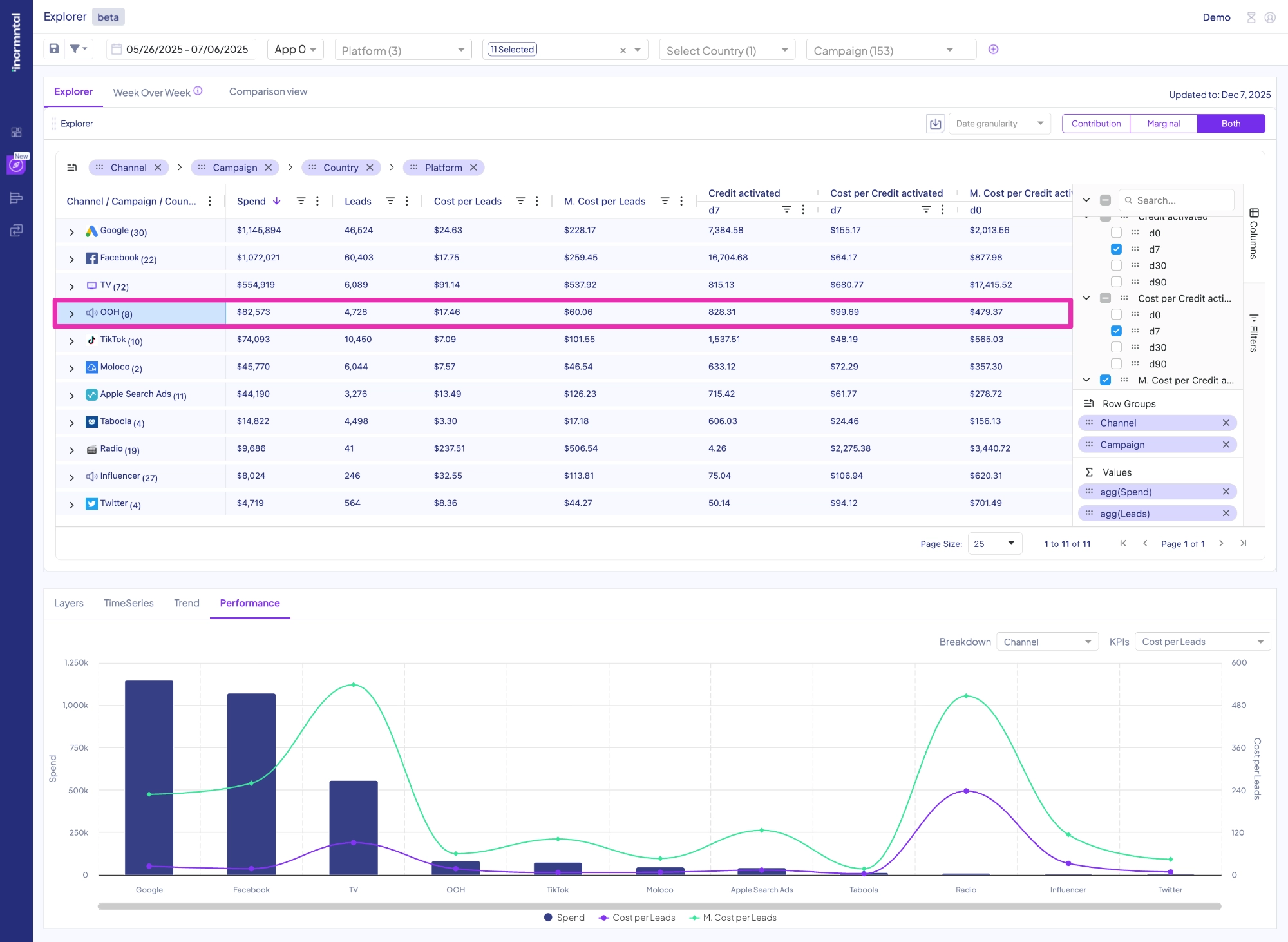
The biggest leap pushing DOOH into the main stage is measurement. OOH measurement used to rely proxy metrics like traffic counts or surveys. But in recent years, DOOH has undergone a measurement revolution, and 2026 will be the tipping point where always-on incrementality becomes the norm, making DOOH Measurable.
So, what changed? A convergence of data, and analytics AI has made it possible to link exposure to impact. Sensor technologies can measure how many people actually look at a digital sign (creating “viewability” metrics akin to online ads) and even gauge engagement through dwell time or interactions. This means DOOH can report impressions and audience data with far more granularity than old OOH ever could.
And using this viewability data, alongside the changes in campaigns, platforms like INCRMNTAL are able to measure the true value generated by DOOH campaigns continuously.
Crucially, these measurement advances have proven that DOOH does drive performance, not just awareness. We can see it! Across our customers running DOOH, we’re seeing the medium as generating results that are comparable with other mediums – especially when Advertisers utilize their always-on incremental performance data to adjust bids and budgets.
All signs (pun intended :-)) indicate that 2026 will be the year DOOH transitions into a mainstream performance channel. Ad spend projections reflect this momentum - DOOH was barreling toward a $3 billion market in the U.S. in 2025, and is expected to get up to $15 billion by 2029. Advertisers are no longer content with DOOH for just broad awareness; they are chasing measurable, outcome-driven advertising, and DOOH is rising to meet that demand.
There’s an obvious reason why DOOH is ramping up. While Mobile ads outgrew any other medium in history due to personalization, location, and data - there’s an unavoidable impact in showing users an ad on a 1,000 inch screen, or taking over the side of a building.
“Local” ads in the neighborhood bus stop, or the subway line users take bring a sense of security and familiarity – proving not only acquisition campaigns, but also for engagement and retention.
Better data and targeting mean DOOH can deliver the right message to the right people (and prove it did so). Smarter creative optimization means campaigns stay relevant and engaging, boosting effectiveness. And a renewed focus on context gives DOOH an edge.
More and more Marketers in 2026 are likely to test and scale DOOH for its unique ability to amplify other channels (OOH plus mobile or social can create an omnichannel halo effect).
Bottom line: DOOH is growing up. In 2026, we expect to see more brands bragging about the tangible results of their DOOH campaigns - whether if it’s sales, installs, first time booking, or revenues. The old boundaries of who can advertise where are blurring. And with every successful, measured campaign, confidence in DOOH will grow, creating a virtuous cycle of investment.
 iOS
iOS Android
 Web
Web TV
TV Influencer Marketing
 Out of Home
 In game
 Podcast
 About Us
 Contact