
Platform
 Overview
 Integrations
Use Cases
Many Possibilities. One Platform.
 Marketing Changes
 Cross - Platform
 Everything
 Budget Allocation
AI and Automation
The Always-on Incrementality Platform
 Explorer
 Analyst
 Geolift
 Actionable Insights
 Media Mix Modeling
Solutions
Teams
Built for your whole team.
 Growth Marketers
 Marketing Analysts
 Data Analysts
Industries
Trusted by all verticals.
 Gaming & Entertainment
 Fintech
 Travel & mobility
 Lifestyle
 eCommerce & Retail
 Healthcare & Clinical Services
 Agencies
Mediums
Measure any type of ad spend

We're halfway through 2026. It really does feel as if time is accelerating. That every day passing by represents a smaller unit of time for each one of us, while in fact the units remain the same. A great way to explain diminishing returns…but I digress. The middle of the year feels like a fair point to pause, look up from the dashboards, and ask a simple question: where is the money actually going? Not where the press releases say it's going. Where Advertisers are quietly putting real budget, pulling it back, or testing something brand new.
So we went back through the first half of spend across our client base. A few things stood out - some predictable, one genuinely new. Here are the five we keep coming back to, and how we're reading them.
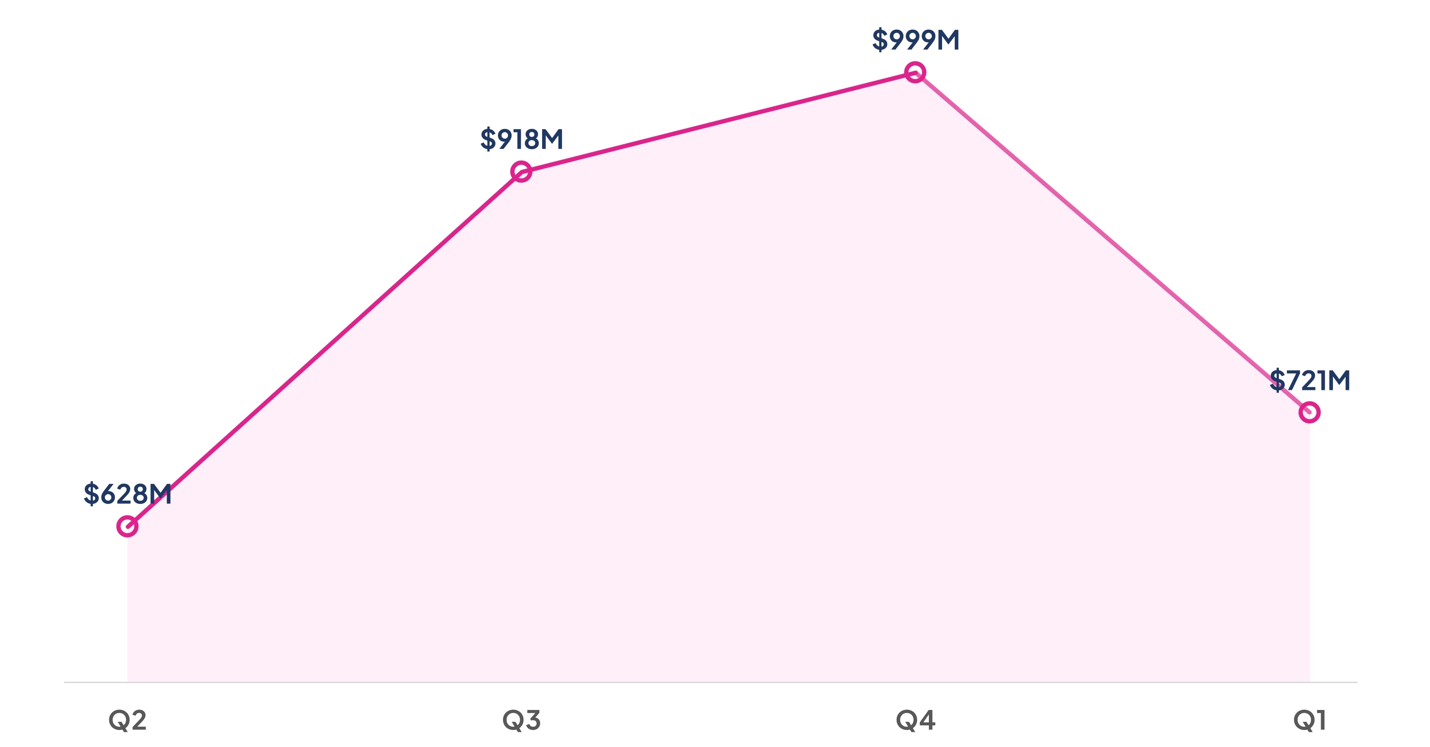
The first half had a clear shape: a strong surge into the seasonal peak, then a steady retreat back toward baseline. Nothing shocking there. What's worth flagging is how broad the surge was. Search, social, TV, CTV, audio - nearly everything inflated together, then deflated together. Just like waves...how poetic…
When every channel moves up, you're not watching a channel win. You're watching the calendar. And that's exactly the period when attribution does the most damage: a rising tide makes every channel look like a hero. Scale something into the peak, watch it "work," and you've learned almost nothing about whether the channel earned it or the season did.
Our read: the first job of a good measurement setup isn't to find winners. It's to tell you which winners are real and which ones are just standing in front of a tailwind.
Here's the counterintuitive one. There have never been more viable channels to choose from - well over a hundred showing real spend (i.e. over 7 figures).
And yet - share-of-wallet is tightening, not spreading. The largest platforms pulled budget back toward the center over the first half, even as the long tail of options grew longer.
We don't think that's because the giants suddenly got better. We think it's because they're safe. With so many horror stories about fraudulent inventory, and non-transparent practices, a lot of Advertisers did the comfortable thing and retreated to the platforms they know. Consolidation, in other words, can be what caution looks like on a spreadsheet - not what performance looks like.
Which is precisely the bias incrementality exists to challenge. The dollar that's easiest to defend in a QBR is rarely the dollar working hardest. While diversification of channels is not a means to get to better results – identifying new channels to break the ceiling definitely is!
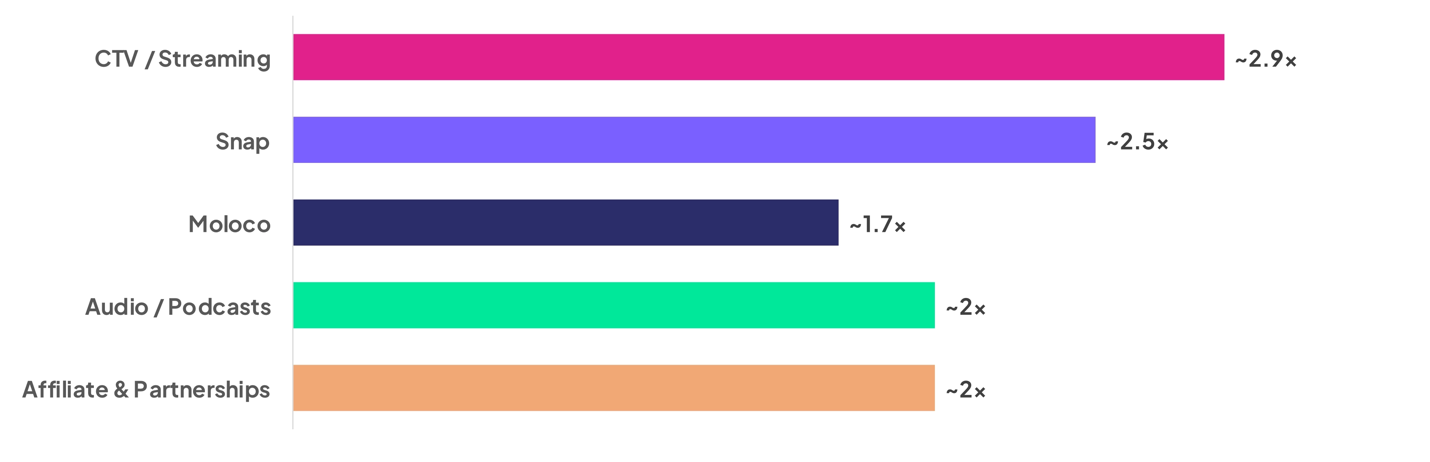
Underneath the seasonal noise, a specific set of channels showed growth on their own merits - and they're a wildly different bunch on the surface. Podcasts and Audio consistently show up as a fast growing “channel” in our data set. With a young, high-intent audience that most Advertisers are desperate to reach – Podcasts continue being an unavoidable success. CTV kept climbing as streaming inventory turned into genuinely measurable performance rather than a brand-budget playground.
Affiliate and partnership marketing kept maturing too - platforms like Impact benefiting as Advertisers embraced outcome-based, pay-for-results models that finally let them measure incrementality versus cannibalization. And on the programmatic side, Moloco held up where a lot of its neighbors didn't, leaning on its algorithmic optimization with their neural network that’s been learning and improving for years.
The common thread: none of these rely on user-level tracking. They win on context, first-party signal, or outcome-based pricing - not on the device-level identifiers that the industry spent the last few years losing. That's not a coincidence. It's the whole pattern.
The mirror image to this is a class of channels built for the previous era - the ones that depended most heavily on abundant device-level signal to do their job. Without naming names, several of them saw meaningful pullback in the first half.
We'd be careful about reading every one of those declines as pure failure, though. Some of it is real efficiency loss as the old machinery gets harder to run. But some of it is something healthier: Advertisers finally measuring what these channels actually delivered. When you switch on incrementality, a share of the "conversions" turns out to be users who were always coming.
Those are not budget cuts. Those are corrections.
This is the one that we were happiest to see. Mainly because it confirmed our opinion .
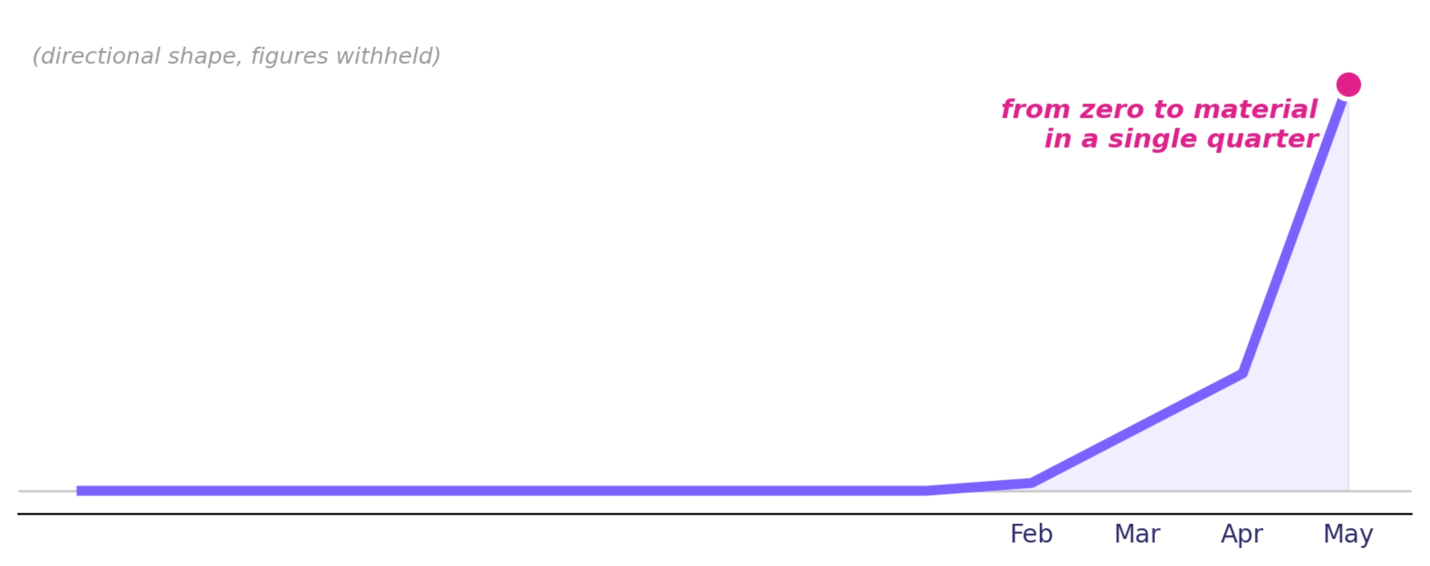
For most of the period, OpenAI Ads showed a flat. Then, it appeared, and it didn't crawl. It ramped fast, going from effectively nothing to a real, if still small, monthly figure inside a single quarter.
Let's be honest about scale: in absolute terms this is still a tiny number against the rest of the market. But it's the only channel we saw go from zero to material that quickly.
Why we care more than the dollar amount suggests: LLMs are not Search. When someone asks an assistant what to buy, they've skipped the ten blue links entirely. There's no click to attribute, no last-touch breadcrumb, no tidy funnel. It's the zero-click problem made literal - which means the moment this channel matters financially, incrementality isn't one option for measuring it. It's the only one that works.
Is this a durable trend or an early blip? Ask us again at year-end. But the first dollar in a new channel almost always looks like a toy. Search ads looked like a toy once too. We're watching this one closely.
Step back and the five insights all reveal an underlying truth.
The seasonal surge, the consolidation, the channels rising, the ones getting challenged, the brand-new frontier - not one of them reads correctly through last-click, and several of them actively mislead you if that's all you've got.
The Advertisers who win the back half won't be the ones who guessed the right channel. They'll be the ones who can see clearly enough to tell a channel that performs from a quarter that flattered it. That's the whole job now: stop optimizing for what's easy to track, and start optimizing for what actually moves the business.
 iOS
iOS Android
 Web
Web TV
TV Influencer Marketing
 Out of Home
 In game
 Podcast
 About Us
 Contact